Traffic
We published 76 posts and 1 podcast (Bangladesh) this month.
Traffic fell from ~55–65k (Sept–Oct) to ~33k in November.
However, comment activity remained strong at 819 comments (~27/day).
We published 76 posts and 1 podcast (Bangladesh) this month.
Traffic fell from ~55–65k (Sept–Oct) to ~33k in November.
However, comment activity remained strong at 819 comments (~27/day).
A few updates from this week:
Sri Lanka is facing severe flooding. Sbarkkum reports major damage to rail and road networks, with Dutch support expected for reconstruction.
Sana Aiyar’s “World at MIT” video touches on her life and work
Sam Dalrymple has a clip on Lahore and Delhi—another reminder of how closely the two cities mirror each other despite partition.
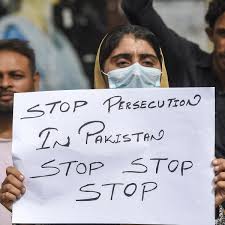
Pakistan’s minority rights bill is worth watching. Continue reading Open Thread: From Floods to LaBal
If the Pakistani military have assassinated IK in his jail cell; well there are no words.
IK would be a martyr to eclipse the likes of Zulfikar Ali Bhutto.
Some interesting links:
Trump says US will ‘permanently pause’ migration from ‘all third world countries’
Maulana Abul Kalam Azad|The Tragic Genius Who Tried to Save United India| Inqalaab (in Urdu)
A University of Pittsburgh study presented participants with poems by ten renowned English-language poets—including Chaucer, Shakespeare, Whitman, Dickinson, and Plath—alongside AI-generated poems in their style using ChatGPT 3.5. Interestingly, AI poems were rated higher in overall quality than the human-written ones, contrary to previous findings.
I am perplexed about how we can assess an AI-generated poem as inferior to a human’s. As when we read a poem, we read it for its content, irrespective of anything else. The emotional valence of Iqbal’s Shikwa has nothing to do with his circumstances; whether he were a general in the British army or a debauched drunk, the poem would still be there to be read, cherished, and savoured. Extending this logic, how can AI-written poems be rated lower simply because they were not written by a human? I don’t know.
Anyone who wants to explain their take on this.
Originally Published: February 03, 2025
The nirīśvaravādi ādi-accelerationists no doubt consider our usage of the word ‘God’ and countless references to ancient myths and texts a serious breach of the philosophy and a perversion of its ideas. Though we are not interested in soothing their fears, the objections they will raise must nevertheless be wrestled with, as Landian Accelerationism portrays itself a purely materialist philosophical system, which, although not often talked about at present, is properly referred to as ‘libidinal materialism’. Thus, we must descend into the ‘sublime basement’ of Land’s philosophy before we may return once more to the heady poetics of Meltdown. His system of thought is most comprehensively laid out in the opus The Thirst for Annihilation (Land, 1992b), which makes it clear that his philosophy follows in the wake of the Nietzschean ‘death of God’, something he explicitly states when he assembles a theoretical machine linking Kant, Schopenhauer, Nietzsche, Freud, and, most importantly, Bataille to himself. As Mackay and Brassier put it in the ‘Editors’ Introduction’ of Fanged Noumena (Land, 2012): “Land allied himself to a line of renegade thinkers – Schopenhauer, Nietzsche, Bataille – who mocked and disparaged academicism and wielded philosophy as an implement for exacerbating enigma, disrupting orthodoxy, and transforming existence” (p. 2-3). Continue reading Meltdown Bhāṣya: Verse 1.1.1 (Part 1.3)
IMF: Pakistan loses up to 6.5% of GDP to corruption as elite capture strangles growth
Trump’s 28-point Ukraine peace plan in full
I’ll add more interesting links; I have more of a zero-tolerance approach so low-signal, overwrought comments will either be deleted, edited or their author’s privileges revoked.
Dear all,
With everything going on in the last 48 hours, we wanted to send a short note to everyone directly. BP has sputtered back to life in the past year, and with that revival comes all the familiar subcontinental pathologies: everyone believes they’re right, everyone believes moderation is biased, and everyone believes someone else is being unfair. In that sense, BP is working exactly as it always has.
We want to restate something very clearly: we’re not going to run a hyper-moderated blog. It takes too much time, too much energy, and, crucially, it’s an unfunded mandate. Nothing is more dispiriting than a dead space. Our approach has been simple and consistent:
1. Authors control their own threads.
If things escalate on your post, you shut it down when and where you see fit. That’s the cleanest system and the only one we can realistically sustain.
2. No bans, shadow bans, or entrapment games.
Once we go down the path of micro-policing, BP loses its character. That’s not the direction we want to take.
3. We do not manufacture controversy.
If anything, the only thing we are biased toward is what the audience reads and engages with. That’s it. Everything else is noise.
Reflections:
Some of you will have seen the recent exchanges where accusations were thrown in both directions, and where intentions were questioned. Without going into details: this is exactly how online political communities melt down; by assuming the worst in each other and by escalating minor provocations into existential battles. It’s the same pattern we saw a couple of years ago at a public talk by Rahul Gandhi in Cambridge: someone asked a loaded, “gotcha” question, the out of context reply went viral, people got outraged, and the whole thing became a cycle of reaction and overreaction. We’re drifting into the same dynamic.
Let’s not.
BP works only when people post, comment, disagree, and move on. If that stops, the blog dies. And as Omar’s recent post highlighted, we want authors to write more, not less.
So our simple request is this: Calm down, carry on, manage your own threads, and do not fall prey to the outrage factory.
If you feel strongly about a situation, reach out; if you want more balance, we’re happy to add an additional admin to offset the load (BP’s editorial board already functions with more factions than the Lebanese Parliament); if something crosses a line, handle it on your post. But let’s not turn BP into a miniature Whitehall where everything becomes bureaucratised. We’ve done extremely well this past year. Let’s keep the energy without burning down the house.
Warmly.
plus ça change, plus c’est la même chose
A Sweep in the Making as NDA Leads on 200+ Seats; RJD Ahead on Only 24
This thread is for your thoughts on the election results in Bihar. You can also use it as an Open Thread.
I will not be heavily moderating this thread but-as always- egregiously anti-Pakistan comments will be summarily deleted. Otherwise, go for it.